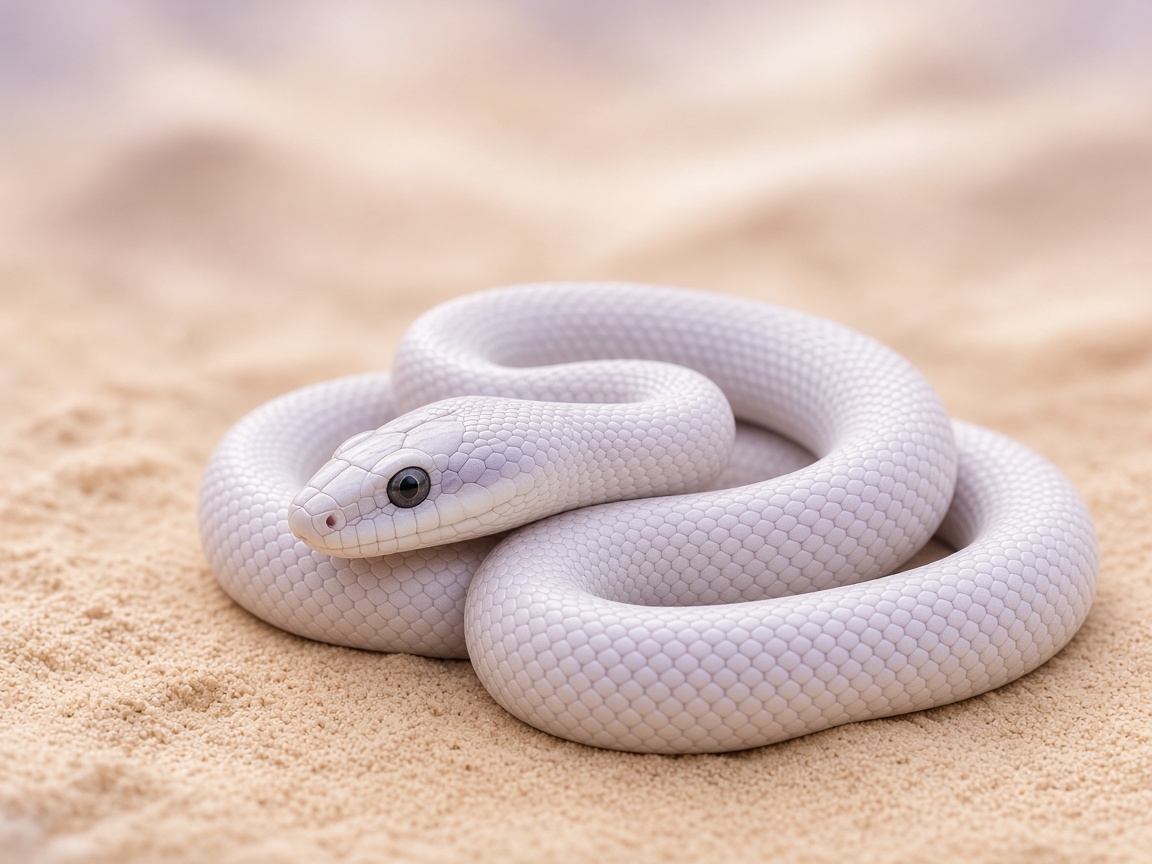
Dream meaning
Snake Dream Meaning
By Drevia9 min read
Claim labels on this page: RESEARCH · FOLK TRADITION · PERSONAL REFLECTION
Page labels id snake-2026-10-17cThe short version
- A snake is not a code for betrayal, money, or a fixed warning.
- Tian and colleagues (2023) studied recent animal dreams from 201 people in China: snakes ranked among the most frequent animals, and the typical snake scene was negative — closer to adverse waking events than to daily contact with real snakes.
- Chase, bite, house, calm contact, shed skin, and kill are different scenes; color alone rarely decides the reading.
Claim labels used below: RESEARCH · FOLK TRADITION · PERSONAL REFLECTION
Snake dream meaning is not automatically betrayal. Chase, bite, shed skin, or calm contact are different nights — what the snake was doing matters more than the fact that it was there.
People reach for a short answer because the animal is alarming. That shortcut fails in a specific way: it ignores what the snake was doing. A snake you were holding, a snake leaving its skin, a snake in the house, and a snake at your heels are four dreams that happen to share an animal.
Start with the scene and with your own history with snakes. Someone who was bitten as a child, someone who keeps them, and someone who only knows them from a video are not bringing the same animal into sleep. If the snake was chasing you, see dream about a snake chasing me. If it bit you, see snake bite dream meaning. For how dream interpretation works on this site, start on the homepage or the dream dictionary.
How to read claims on this page — three labels
- RESEARCH — findings supported by a cited empirical study, with limits stated; a citation elsewhere on the page does not make every nearby sentence research
- FOLK TRADITION — cultural, religious, historical, or popular readings; not scientific findings and not forecasts
- PERSONAL REFLECTION — a possible link to the dreamer's scene, feeling, or waking life; for reflection, not a diagnosis and not a prediction
Common interpretations
FOLK TRADITION — RESEARCH appears only when a study is named below; other lines are FOLK TRADITION or PERSONAL REFLECTION, not validated mappings.
One theme is threat the dreamer is already tracking. The threat is not always a person. It can be a decision, a debt, a conversation, a part of yourself you call dangerous.
Another is avoidance. Something keeps returning because you keep leaving the room. The snake is a form for that return, not proof that someone is plotting.
A third is change, and it belongs mainly to dreams where skin is shed, or where the snake is quiet and you are curious rather than hunted. Using "transformation" for every snake empties the word.
Some cultures treat a snake as a guardian or as part of healing. Pasting one culture's reading onto every dreamer is the same mistake as "snake means betrayal." If that frame is not yours, it is not your meaning.
Folk lines about money, luck, or a coming attack circulate for the same reason: they are short. Opposite folk answers for the same picture are a sign that culture is doing the talking. This page does not treat the dream as a forecast.
A 2023 content analysis of recent dreams (Tian and colleagues, 201 people in China, including 52 men) found snakes among the most frequent animals, with women reporting more snake dreams than men in that sample. Negative snake images were the usual pattern. Associations sat mainly with adverse life events; waking contact with an actual snake was lower than expected for that animal. The paper does not name the event, and it does not say betrayal.
RESEARCH
"Negative images of typical images of snakes were most frequent in dreams, followed by dreams about dogs and cats."
What changes the meaning
PERSONAL REFLECTION — scene forks for reflection, not research-validated mappings.
Ask what the snake did before you ask what a snake "means." The forks below are reflective possibilities, not research findings and not a forecast about another person.
| Detail in the dream | PERSONAL REFLECTION |
|---|---|
| Chasing you | Something you are not turning toward this week — not a person literally hunting you |
| Bite, with pain | A remark, discovery, or consequence that already stings |
| Bite, barely felt | A sting you have not fully registered yet |
| In the bed or house | Something you treat as "outside" already inside a safe place |
| Calm in your hands | Familiarity, skill, or a fascination you don't advertise |
| Shedding skin | Change that earned the word — old layer left, sometimes raw |
| You killed it | Mastery or guilt; the feeling decides which question to ask |
| Many snakes | Overwhelm or scattered threats, not one neat omen |
| Color (black, green, white…) | Atmosphere and personal association; color alone is a weak codebook |
It was chasing you
Being pursued usually points at something you are not turning toward. The question is what, this week, you are moving away from. It is not an instruction that a person is hunting you.
It bit you
A bite is more specific than a chase. People often connect it to a remark, a discovery, or a consequence they did not expect to sting. Pain in the dream matters. For a full bite page, see snake bite dream meaning.
It was in the bed or the house
Indoors, the image gets personal: something you think of as outside your life is already in a place you treat as safe. That "something" might be a person. It might be news you brought home and have not said out loud.
You were holding it, or it was calm
Calm contact does not fit the betrayal story. It leans toward familiarity, skill, or a fascination you don't advertise. If you actually live with snakes, take the literal reading first.
It shed its skin
Shedding is the scene that earns a change reading: an old layer left behind, sometimes with relief, sometimes with the rawness of being unfinished. Don't import this onto a dream that had no skin and no leaving.
You killed it
Killing the snake can feel like mastery or like guilt. Which one you felt is the whole difference. Mastery asks what you are ready to end. Guilt asks what you destroyed that you still need.
Color, size, or many snakes
Black, green, white, yellow, or a large snake often carries the feeling you already attach to that color or size. Many snakes lean toward overload. None of these details override what the animal did, or how you woke.

Emotional context
PERSONAL REFLECTION — not a diagnosis and not a prediction.
Terror and fascination are both common, and fascination changes the reading. If you wanted to watch the snake, or you felt a pull rather than a need to run, the dream is closer to curiosity about something powerful or forbidden than to an enemy.
Shame is a third feeling: the snake appeared where other people could see it, and the heat was in being caught, not in the animal. That dream is about exposure. Disgust without fear often attaches to something you have labeled unclean — a desire, a tactic, a person — and the label itself is worth questioning while you are awake.
If you woke relieved, do not force a crisis onto the night. Relief after a chase or a kill can mean you already decided something while awake, and the dream is late. The feeling on waking outranks the symbol chart — the same rule used in dream interpretation on this site.
What it might connect to in waking life
PERSONAL REFLECTION — not a diagnosis and not a prediction.
Look for something you already describe to yourself as dangerous: a person, a job move, a truth you are not saying. Sometimes the snake is that person. Often it is a situation you have given a face so you can run from it.
Then check the literal trail. A snake on a walk, a video, a logo, a pet, a story someone told at dinner — recent memory is allowed to be recent memory. Personal history outranks the dictionary. If you were bitten, the dream can be the memory of the bite. If you handle snakes, closeness can be closeness. The symbol is the last explanation, not the first.
A dream about teeth falling out works the same way: the picture is common, the scene is not. Bring that habit back here. For a reading that starts from your own associations, use the AI dream interpreter.
Biblical perspective
FOLK TRADITION — Scripture and tradition as an optional lens, not a personal prophecy and not RESEARCH unless a study is named.
Scripture does not use the serpent in only one direction, which is why a single biblical meaning is not an honest summary. This lens matters if you already think in these stories. If you don't, it is a cultural reading, not your result.
In Genesis 3, the serpent reframes a boundary as a deprivation. Dreams that borrow that shape often sit next to a temptation the dreamer is already arguing with themselves about. That is a reflective reading of the story shape — not a prediction that they will give in, and not a claim that every snake dream is "from God."
In Numbers 21:8–9, a serpent image is lifted up in a story about healing — looking at what has been hurting people, not inviting evil into the house. A snake dream read only as "the devil" skips this strand.
Matthew 10:16 pairs the serpent with shrewdness, next to innocence, not with malice. Wisdom and threat are different uses of the same animal. Scene and feeling still outrank the verse. None of this is a fortune, and none of it replaces what the snake actually did in the dream. For how Scripture treats dreams in general — not as a personal prophecy machine — see biblical dream meaning. Same rule as About: we explore possibilities, we do not predict the future.
Psychological perspective
PERSONAL REFLECTION — a lens for reflection, not a diagnosis.
A practical reading treats the snake as the threat system rehearsing. The brain practices danger in pictures it already finds alarming. That explains the chase and the bite better than it explains a shed skin or a snake resting in the hands.
A second reading, used in Jungian writing, treats the snake as something in the dreamer they don't want to claim: aggression, desire, a cool competence they call cold. This fits when the feeling is recognition — "that is also me" — more than when the feeling is simple fear of an intruder.
Use the transformation motif only if the dream earned it, usually with a shed skin or a clear before-and-after. Applied to every snake, it becomes the same one-line answer this page is trying not to be. If the dream repeats alongside poor sleep or a waking fear you cannot shake, look at stress. Don't look at the dream for a prediction about another person.
PERSONAL REFLECTION — a composite for reflection, not one person's diary and not a prediction.
This is a composite, not one person's diary. Someone dreams a snake in the kitchen doorway, not attacking, just present. They wake uneasy, not terrified. The week before, they had brought home news about a job they had not told their partner yet. The dream did not predict betrayal. It reused the feeling that something "outside" was already indoors.
Change the feeling and the dream is no longer the same. Another person with the identical doorway image, who woke fascinated, and who keeps snakes, is not reading a secret-at-home dream. Same picture. Different feeling. Different link to the day. That is why a page like this can list possibilities and still refuse a single answer.
Frequently asked questions
Does dreaming about a snake mean someone will betray you?
Not by default. Betrayal is one story people tell when the snake felt invasive and personal. A snake you were calm with, or a snake shedding skin, does not fit that story. Start from what the snake did and what you felt. See What changes the meaning above.
What does a snake dream mean in the Bible?
The serpent is used as temptation, as part of a healing story, and as a picture of shrewdness. Which strand applies depends on the scene and on whether that framework is yours. It is not a prophecy. See Biblical perspective.
What if the snake was chasing me?
A chase often sits next to something you are not facing, with the snake as the form your mind gave it — a reflective possibility, not proof someone is after you. Ask what you have been moving away from this week. For the chase-specific page, see dream about a snake chasing me.
Is it good or bad to see a snake in a dream?
Neither by default. Fear, fascination, shame, and relief point in different directions. A calm snake and a biting snake are not the same dream. Good/bad charts skip the scene.
Do snake dreams mean money?
No. There is no reliable evidence tying a snake dream to money arriving or leaving. That line is folk habit, not a finding. Look at what the snake did and what in waking life already feels risky or unfinished.
What is the spiritual meaning of a snake in a dream?
There is no single spiritual meaning shared across traditions. Some frames stress change or healing; others stress threat or deception. If a spiritual frame is already how you think, keep the scene and the feeling first. This page is not a prophecy and not denominational advice.
Why do snakes show up in my dreams?
In Tian and colleagues' 2023 sample, snakes were among the most frequent dream animals, and the usual snake image was negative, with links closer to adverse waking events than to daily snake contact. Your own history with snakes still comes first. Recurring nights call for looking at stress and sleep, not for a prediction about another person — and not for a diagnosis of anxiety.
What does a black, green, or white snake mean?
Color is a weak codebook on its own. It often carries the feeling you already attach to that color. What the snake did, and how you woke, still outrank the palette.
Sources
RESEARCH — reference trail — check the original paper for methods and limits; a citation is not proof of a fixed symbol meaning.
- Tian, Wu, Duan, Chen & Shen, 2023
Typical images of animals in dreams: Results from a content analysis. Dreaming, 33(1), 75–92. 201 subjects in China (52 male). Snakes, dogs, and cats were the most frequent species; women dreamed of more snakes than men in that sample. Negative snake images were most frequent. Associations mainly related to adverse life events; snake-dream contact with real snakes was lower than expected.
Genesis 3; Numbers 21; Matthew 10:16
The passages named in the biblical section: a boundary recast as deprivation (Genesis 3), a serpent image inside a healing story (Numbers 21), and shrewdness set next to innocence (Matthew 10:16). Scene still outranks the verse.